Posts

Showing posts with the label 1 Samuel

Heroes? Samuel

1 Samuel 3:1-10 3:1 The boy Samuel ministered before the LORD under Eli. In those days the word of the Lord was rare; there were not many visions. 2 One night Eli, whose eyes were becoming so weak that he could barely see, was lying down in his usual place. 3 The lamp of God had not yet gone out, and Samuel was lying down in the house of the LORD, where the ark of God was. 4 Then the LORD called Samuel. Samuel answered, “Here I am.” 5 And he ran to Eli and said, “Here I am; you called me.” But Eli said, “I did not call; go back and lie down.” So he went and lay down. 6 Again the LORD called, “Samuel!” And Samuel got up and went to Eli and said, “Here I am; you called me.” “My son,” Eli said, “I did not call; go back and lie down.” 7 Now Samuel did not yet know the LORD: The word of the LORD had not yet been rev...
Heroes? Eli

1 Samuel 1:12-18 I have grown up in an achievement-oriented society. We are known by what we accomplish. We want to be known as competent and strong.   Last week we looked at the story of Hannah, and we met Eli, the high priest of Israel, who loved to sit in his chair at the entrance to the Tabernacle in Shiloh. We saw Eli in direct contrast to Hannah — she was a nobody, yet she knelt in the presence of Yahweh. Eli was the high priest, yet he had no real relationship with Yahweh! Eli would have been the competent and strong man; he was the high priest.   But the contrast does not end here. Hannah dedicated her child to God, quite literally; he was raised in the Tabernacle. But look at Eli’s own sons — 1 Samuel 2:12 describes them this way: Now the sons of Eli were worthless men. They did not know the Lord. Worthless. Can you imagine? In 1 Samuel 1:16, Hannah pleads, “please don’t think I’m a worthless woman.” We remember that it was she who was in positio...

Heroes: Hannah

1 Samuel 1:9-20 We have been looking at some characters from the Old Testament. Some are true heroes of the faith. Others have demonstrated how flawed and sinful humans are. In today’s text, we begin a new chapter in the story of God’s people. They have lived through the times of the judges, times where Israel had no king; everyone did as he saw fit. But the book of 1 Samuel provides a transition to the times of the kings. The immediate context of what we read this morning is this: There was a man named Elkanah who had two wives. Hannah and Peninnah. Hannah was barren. In those days, it was customary for a husband to take a second wife if his first wife could not give him a son/heir. The second wife, Peninnah, had sons, and she tormented Hannah day and night. Hannah was greatly grieved. So at the point of this scripture, the entire family went to the Tabernacle in Shiloh for worship.   Hannah goes to pray. When she goes, we meet Eli, the high priest. Here he sits,...

The Call

Exodus 3:1-6 1 Samuel 3:1-10 Isaiah 6:1-8 Jeremiah 1:4-10 I read you four call stories from the Bible: Moses, Samuel, Isaiah, and Jeremiah. They are amazing stories. Moses already had an awesome start to life, being saved from death by his mother putting him in a basket in the reeds in the Nile, and he was saved by the Pharaoh’s daughter, of all people. But here he is, years later, toiling away in Midian, tending sheep, when God speaks to him through a burning bush. Then there is Samuel, whose mother prayed fervently for a child, and when her child was born, she brought him into the sanctuary of the Lord to be raised there. Though the word of the Lord was rare in those times and people just weren’t having visions, God spoke to the boy Samuel in an audible voice. Isaiah had an awesome vision in which God spoke to him, asking, “Whom shall I send?” and Isaiah answered, “Here I am, send me.” And as for Jeremiah, we simply read that “the word of the Lord came to...

Nobody From Nowhere

Blessed are the meek, for they will inherit the earth. Matthew 5:5 What do you think of when you hear the word "meek?" One picture generally comes to my mind and that is a mouse or a mousy person. Meek doesn’t seem like a positive word – people generally don’t want to be described as meek. It carries the connotation of being weak or being a push-over. You can probably think of someone who you might describe as “meek” – and it’s probably not a good thing. Meekness seems to present a contrast with strength. The Greek word that has been translated "meek" or "humble" or "gentle" is πραος pra-os . Praos can also be used three interesting ways: it describes a soothing medicine; it is used by sailors to describe a gentle breeze; and is used by farmers to describe a broken colt. If you think about it this way, medicine can be soothing, but too large of a dose can be devastating. Sailors love a gentle breeze, but a gentle breeze can turn into a...

Jesus the King*

Image
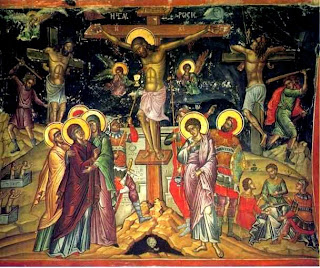
Good Friday Community Service Everything started exactly right. Adam and Eve, in the Garden of Eden, with God as their God and friend. But you know the story; they sinned, and the entire world felt the sting. Separation from God ensued. The God of the Universe pursued His creation, created from nobody a people, a people He would bless to be a blessing to the world. The Lord would be their God and they would be His people. God led Abraham, Isaac, and Jacob. Later, God called Moses to lead His people out of Egyptian captivity – leading Israel in a cloud during the day and a pillar of fire at night. But in the last five chapters of the book of Judges, three times we find the phrase: “in those days Israel had no king.” This is an important designation, because a king was not simply the ruler of his people. In the Ancient Near East, a king didn’t function quite like a king or ruler might function today. It was the universal understanding that the king was not the top dog – the deity w...

What's Important?

Luke 16:19-31 “What happens after you die?” has been a popular topic of discussion for quite a while, recently it has hit the forefront with a popular book from a Minor Christian celebrity, a book that denies the existence of Hell. The point of the book is that a loving God wouldn’t send people to Hell. It would be great if that was true, because Hell is a terrible place of punishment and separation from God, and nobody wants to go there or for their friends to end up there, and a modern interpretation of who God is might suggest that a God who loves us so much wouldn’t want anyone to end up there, and if he doesn’t want anyone there, and since he is God, after all, he could make it so that nobody ends up in Hell. The problem with this view, however, is that it doesn’t hold up under biblical scrutiny. Jesus Himself talks about Hell, and when he does, he is clear in its existence. The context for today’s parable is that Jesus was teaching his disciples and the Pharisees we...